Transforming global service workflows through Human-Centered Design
Leadership through design isn’t just about aesthetics—it’s about delivering clarity, alignment, and efficiency across global operations.
In an environment where complexity often stands in the way of efficiency, rethinking the user experience of large-scale digital platforms becomes not only a design challenge—but a strategic imperative.
Over the past two years, I led a multifaceted transformation initiative for a leading multinational in the financial services sector, focused on streamlining the experience of managing large, multi-country service programs. By applying human-centered design principles at scale, we delivered a set of integrated solutions that are already reshaping how customers, partners, and internal teams interact with the platform.
From fragmentation to integration
The initial platform, though functionally rich, was fragmented. Manual processes like Excel spreadsheets and PDF exports dominated day-to-day workflows. Transparency across stages was minimal, and users—from underwriters to brokers—were left toggling between systems, often relying on emails and calls to move forward. The call for an intuitive, streamlined, and data-driven experience became impossible to ignore.
Putting people at the center
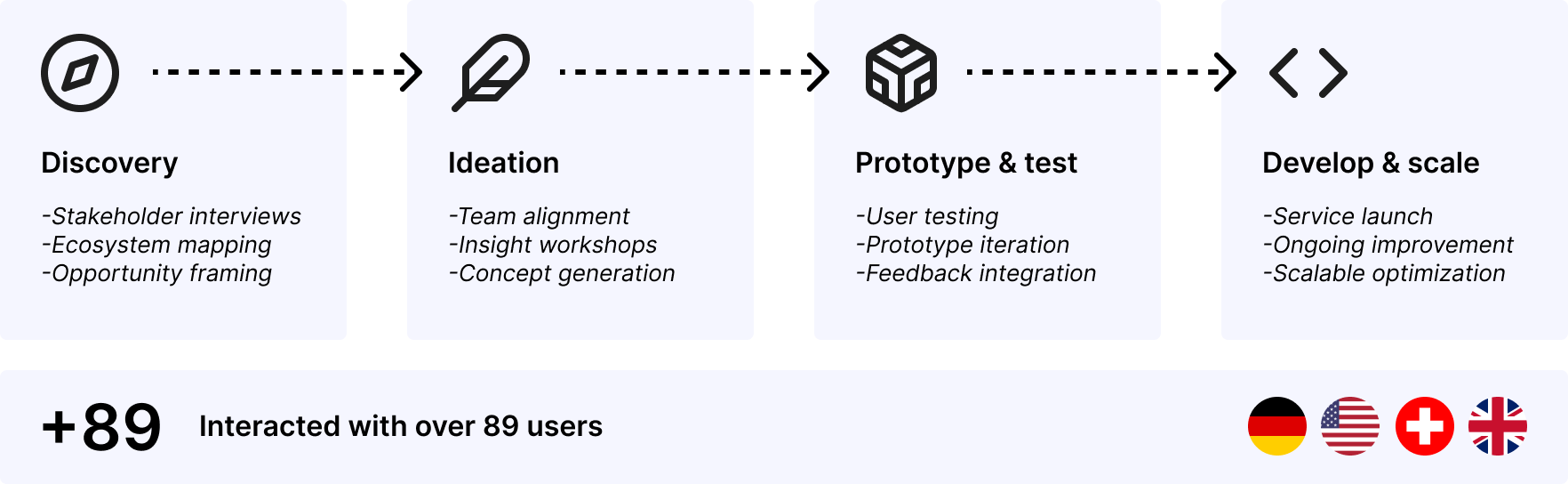
We built our approach on user research and co-creation. With over 35 user interviews conducted across countries and functions, supplemented by 5 collaborative design workshops, we distilled real insights from diverse perspectives. Rapid prototyping and validation with internal and external users allowed us to evolve design concepts iteratively. Cross-functional collaboration was key, involving product owners, analysts, and service leads in shaping meaningful change.
Four key solutions that made a difference
Program Structure Matrix
Understanding how an international program was organized used to require large, often confusing spreadsheets. Our digital solution clearly maps relationships between policies, geographies, and lifecycle stages.
- Reduced reliance on Excel.
- Better stakeholder alignment during onboarding and renewals.
Service Performance Dashboard
We replaced static reports with a real-time dashboard that provides performance benchmarking and exportable data, tailored to client needs.
- Faster report generation.
- Improved clarity for stewardship presentations.
Quotation Interface
By centralizing collaboration, negotiation, and version control into a single digital experience, we eliminated friction in the quote lifecycle.
- Enhanced broker-underwriter collaboration.
- Increased formal quote uptake due to reduced delays.
Program Status Tracker
Previously, tracking the progress of a program involved back-and-forth emails, phone calls, and file searches. Our solution brought clarity to the post-bind process.
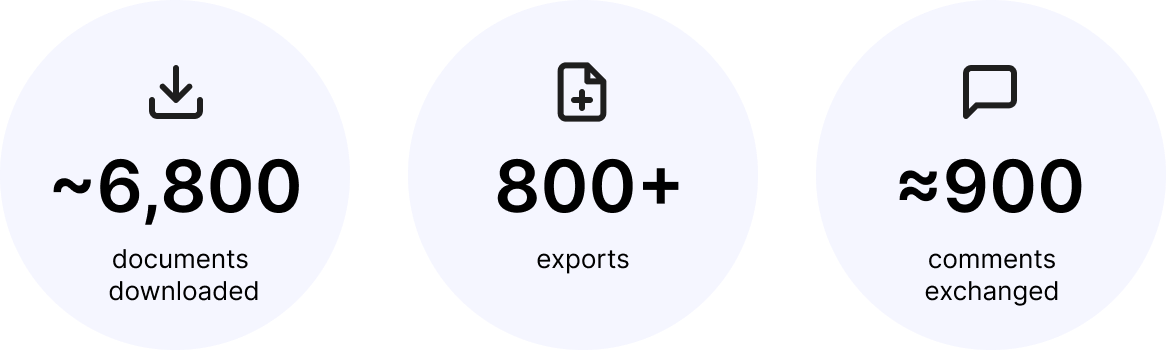
Key usage metrics:
A dynamic ecosystem
To ensure these solutions work in harmony, we developed a living Ecosystem Map. It visualizes user roles, system dependencies, and data flows, serving both as a communication tool and strategic planning asset.
Impact that speaks volumes
The redesigned experience has delivered measurable success:
- Around 30% growth in program onboarding year-over-year.
- Over half of active users engaged with the platform in the past year.
- 4,000+ logins recorded within a 12-month period.
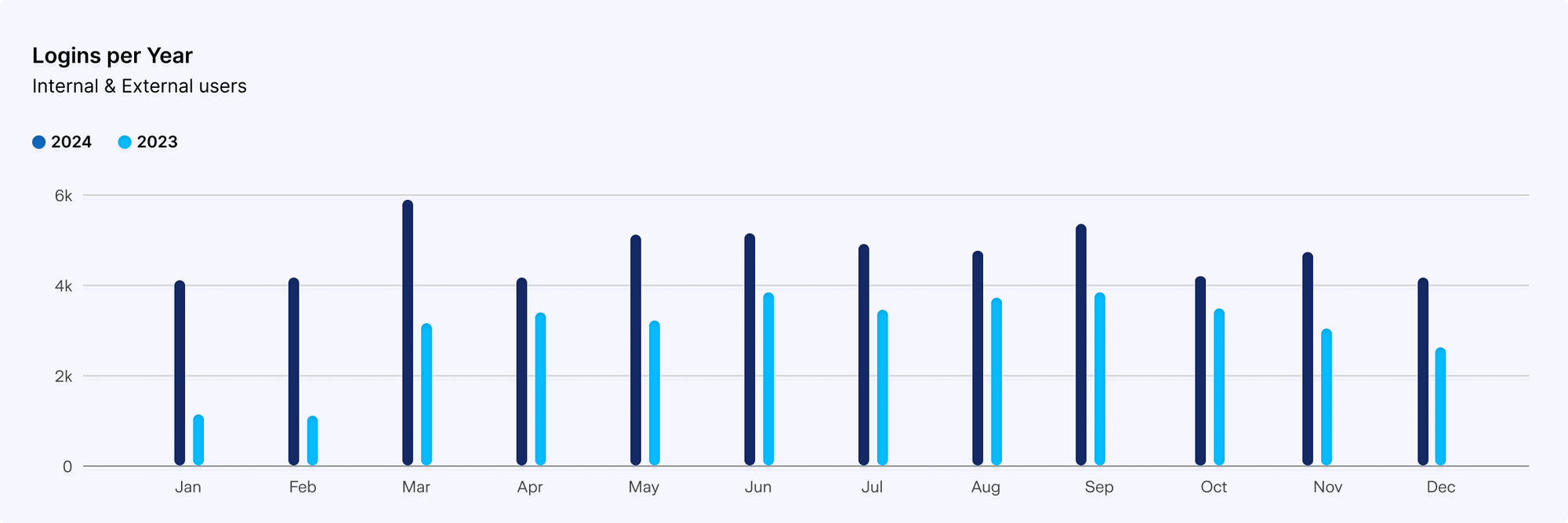
But numbers tell only part of the story. User feedback underscores the shift:
“It makes life easier for customers. They just go there, boom, they see everything in one place.”
“Pretty impressed by how simple you were able to get it on one page.”
Looking ahead
With a solid foundation in place, our focus shifts toward refinement and growth. We will continue to:
- Analyze user behavior to guide enhancements.
- Collect ongoing feedback to shape roadmap priorities.
- Expand features that align with real user needs.
We're building not just for the present, but for future scalability and adaptability.
Conclusion
This journey has underscored the transformative power of human-centered design. By listening intently, designing thoughtfully, and collaborating deeply, we've not only improved a platform—we've helped transform how people work across borders and functions.
This is what user-centered design at scale truly looks like.
Whether you're exploring similar challenges or simply share an interest in thoughtful product design, feel free to reach out or connect via LinkedIn.